Buyer's Background
All about Kingman turquoise.
A short read on what makes Kingman material distinctive, what to look for in different grades, and why it's the most recognizable American turquoise on the market.
Where it comes from
Kingman turquoise comes out of the Mineral Park mine in the Cerbat Mountains, about fifteen miles northwest of downtown Kingman. It's a working copper pit; the turquoise has been pulled from it for generations, and today by the Colbaugh family, who've held the turquoise rights there since the 1960s. It's the largest turquoise mine in the country. Stones are usually labeled "Kingman," sometimes "Ithaca Peak" (the older part of the pit, mostly mined out now) or "Turquoise Mountain" (where most of what's cut today comes from). All three names are the same operation.
What it looks like
The hallmarks of Kingman material:
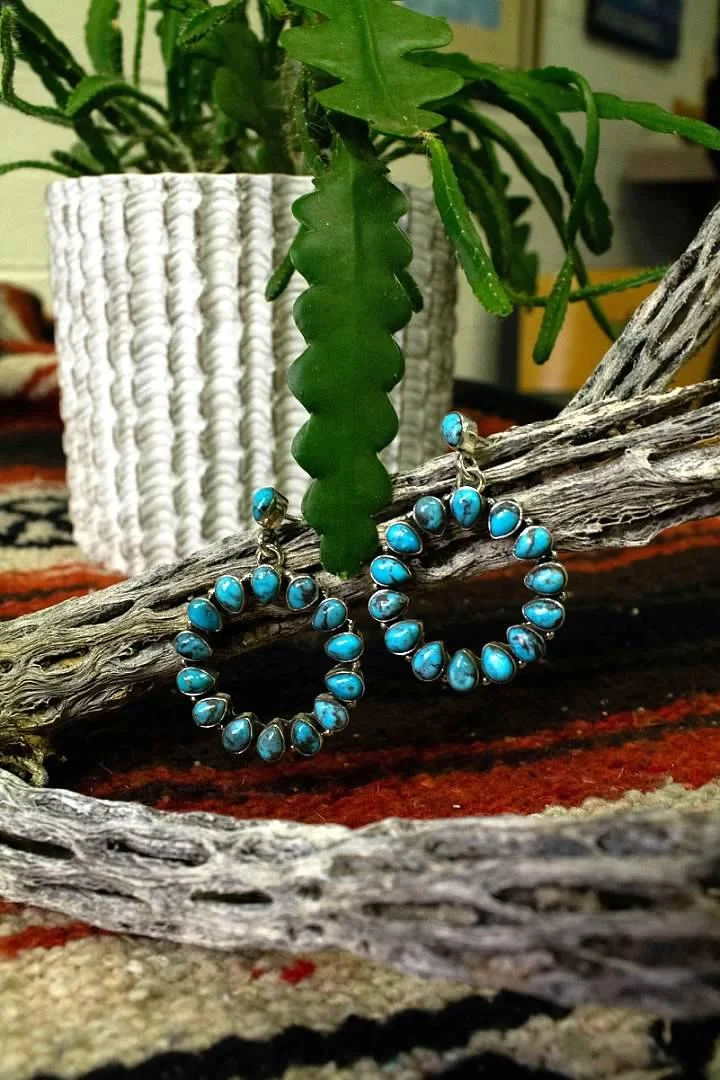
- Color. Deep blue with a hint of green, sometimes leaning toward the lighter sky-blue end of the spectrum. The blue is generally saturated and "alive" rather than chalky or muted.
- Matrix. Often present and visible. Classic Kingman is black matrix, sometimes with flecks of pyrite that read as gold or silver — the tight "water web" and "birdseye" patterns collectors pay up for. Brown matrix turns up too, but if a seller tells you chocolate-brown web is the Kingman signature, that's Bisbee's tell, not ours.
- Hardness. High-grade natural Kingman is hard enough to cut and wear untreated, but that's the minority. Most of what comes out of the pit is chalky and gets stabilized before it's cut. Both wear fine in a ring; the natural material just costs more. More on that here.
Grades and what they mean
"Kingman turquoise" covers a wide quality range. In rough terms:
Gem grade ("high grade")
The top of the pyramid. Saturated color, minimal matrix, naturally hard, no stabilization needed. Rare, expensive, and the material that most serious collectors are chasing. A small high-grade cabochon can run several hundred dollars on its own, before any setting.
Natural (untreated)
Real turquoise from the mine, naturally hard enough to wear without treatment. Color and matrix vary widely. The everyday "good" Kingman material — the kind you'd happily spend $200–$700 on for a serious ring or pendant.
Stabilized
Real turquoise that's been impregnated with resin to harden it for cutting and wear. The majority of Kingman on the market is stabilized. It's real turquoise — priced lower than natural, and an honest seller says so up front. We wrote a whole guide on natural vs stabilized and what each should cost.
Reconstituted ("block")
Real turquoise dust mixed with epoxy and pressed into a slab. Often marketed misleadingly as "turquoise." It's not natural stone. Buy it knowing what it is and pay accordingly.
The look beyond color
People often ask us "is darker blue better?" Not really. The market values different looks for different reasons. Spider-web matrix (fine, dense webbing) commands a premium even at lower color saturation. A clean, uniformly blue stone with no matrix is also valued, but for different reasons. Black matrix flecked with pyrite is the presentation most associated with Kingman, and a tight water-web pattern over a bright blue is what serious collectors chase.
The honest answer: the best Kingman turquoise is the piece that speaks to the person buying it. A stone you love and will wear for decades is worth more than a "higher-grade" stone you bought because someone told you to.
Why people collect it specifically
Three reasons come up over and over with our regulars:
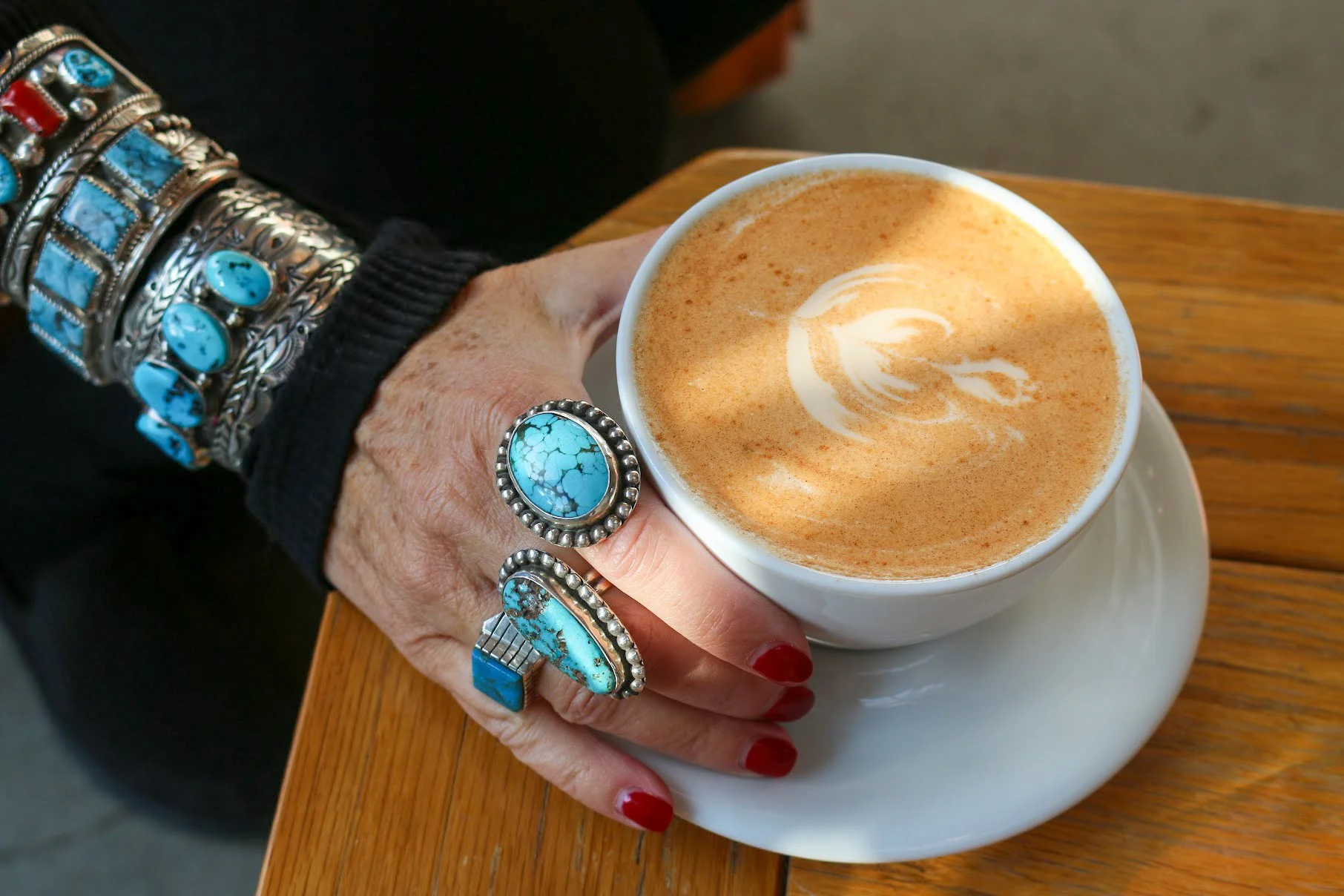
- It's American. Mined in the United States, often set by American Indigenous silversmiths. For collectors who care about provenance, that's a big deal.
- It holds up. Cut and set properly, Kingman wears well for decades. Heirloom-quality if you treat it right.
- It has a look. The bright-blue-with-black-matrix presentation is iconic. Once you see real Kingman material, the imitations stop fooling you.
Before you buy
Read our guide on how to tell real Kingman turquoise from the fakes — knowing what to look for protects you anywhere you shop. Then check our care guide: how to care for turquoise jewelry so it lasts decades. And if you're planning a trip, see our local guide on where to buy turquoise in Kingman, AZ.
Browse the collections
See what real Kingman material looks like in the case: rings, necklaces and pendants, bracelets and cuffs, earrings, Indigenous artisan pieces, or custom design.
Find your piece. Cherish it for generations.
Stop by the shop on Beale Street, give us a call, or plan a Route 66 detour. We're here Monday through Saturday — no pressure, just honest advice.